


The United Arab Emirates is a land of breathtaking ambition, where futuristic skylines meet vast, serene deserts. Its road network is a testament to this progress—a marvel of modern engineering designed for efficiency and speed. However, to truly enjoy the freedom of the open road here, from the bustling arteries of Sheikh Zayed Road to the tranquil coastal highways of Fujairah, one must have a thorough understanding of the UAE traffic rules. These regulations are not merely suggestions; they are a strict framework designed to protect every life on the road.
For new residents, visitors, and even long-time drivers, the traffic laws can seem complex and the penalties daunting. This comprehensive guide is designed to demystify the UAE traffic system. We will delve into the latest updates, explain the structure of fines and black points, and provide practical advice to help you drive safely, avoid penalties, and contribute to the nation’s vision of zero road fatalities. Whether you’re cruising through the heart of the Best Place to Live in Dubai or embarking on a cross-emirate adventure, this knowledge is your most valuable companion.
Understanding the Foundation: Federal and Local Jurisdictions
It’s crucial to understand that traffic management in the UAE operates on two levels. The federal government, through the Ministry of Interior, sets the overarching traffic law that applies across all seven emirates. This includes the general framework for licensing, registration, standard fines, and black points. However, individual emirates, particularly Dubai and Abu Dhabi, have their own local traffic departments (Dubai Police and Abu Dhabi Police) that implement these laws and may add their own emirate-specific regulations, fines, and procedures. Always check with the local police authority for the most precise, location-specific information.
The Most Critical UAE Traffic Rules:
The following sections break down the most important rules, categorizing them for clarity. We will move beyond bullet points and into detailed explanations to give you a full, contextual understanding.
1. The Menace of Distracted Driving

This is, without a doubt, one of the most heavily penalized and dangerous offenses on UAE roads. The authorities have left no room for ambiguity: if you are driving, your focus must be on driving.
The Specifics and The Fines: The law explicitly targets the use of mobile phones for calling, texting, or browsing without a hands-free kit. However, the definition of “distraction” has been broadened significantly. It now includes eating, drinking, adjusting the car’s entertainment system in a way that diverts your attention, and even interacting with passengers in a reckless manner. The most significant update in recent years involves the use of smartphones. Being caught holding a phone for any reason while driving can result in a substantial fine and black points.
The standard federal penalty for using a phone while driving is a fine of AED 800 and 4 black points. In Dubai, if a driver is caught taking photos or videos while the vehicle is in motion, the fine can escalate to AED 1,000 and 4 black points. The message is clear: your phone can wait.
How to Stay Safe: The solution is simple yet requires discipline. Activate the “Do Not Disturb” mode on your phone while driving or place it in a mount where it is out of reach. Use a Bluetooth hands-free system if you must take an urgent call, but even then, it is safer to pull over. Make all adjustments to your GPS, music, or climate control before you begin your journey.
2. The Seat Belt Mandate: A Non-Negotiable Lifesaver
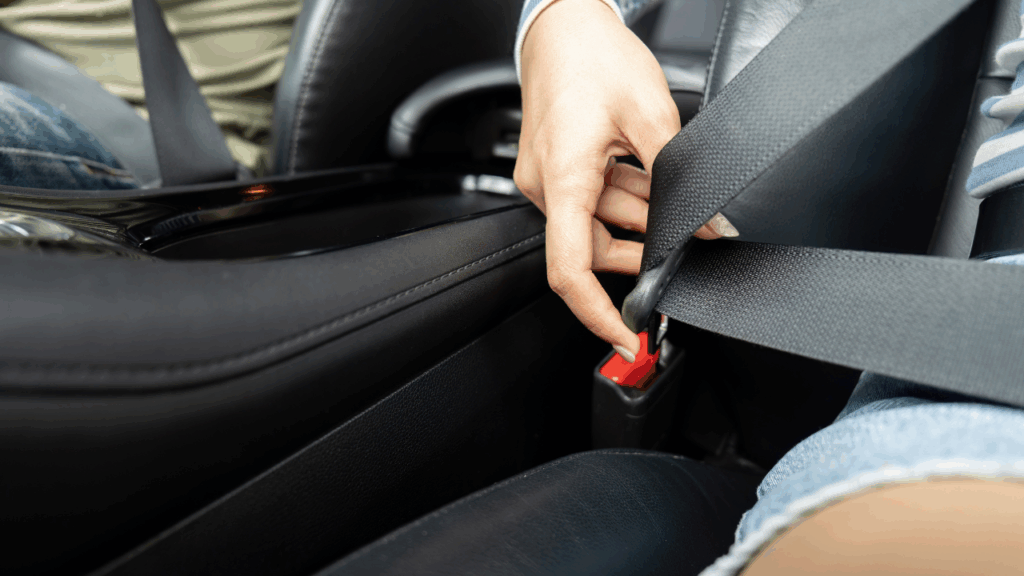
The UAE enforces a strict and comprehensive seat belt law. It is not just a recommendation; it is a critical safety requirement for everyone in the vehicle.
The Specifics and The Fines: The driver is legally responsible for ensuring that all passengers in the vehicle are wearing their seat belts. This applies to adults in the front and back seats. A common misconception is that back-seat passengers are exempt; they are not. Furthermore, children under the age of four must be secured in a federally approved child safety seat. The fine for not wearing a seat belt is AED 400 and 4 black points, which are assigned to the driver for any unbuckled passenger.
How to Stay Safe: Cultivate the habit of buckling up the moment you get into the car, regardless of how short the journey. Before you start the engine, do a quick visual check to ensure all passengers have done the same. Investing in a proper child car seat is not an expense; it is one of the most important investments you can make for your child’s safety.
3. Speed Limits and The Dangers of Sudden Braking
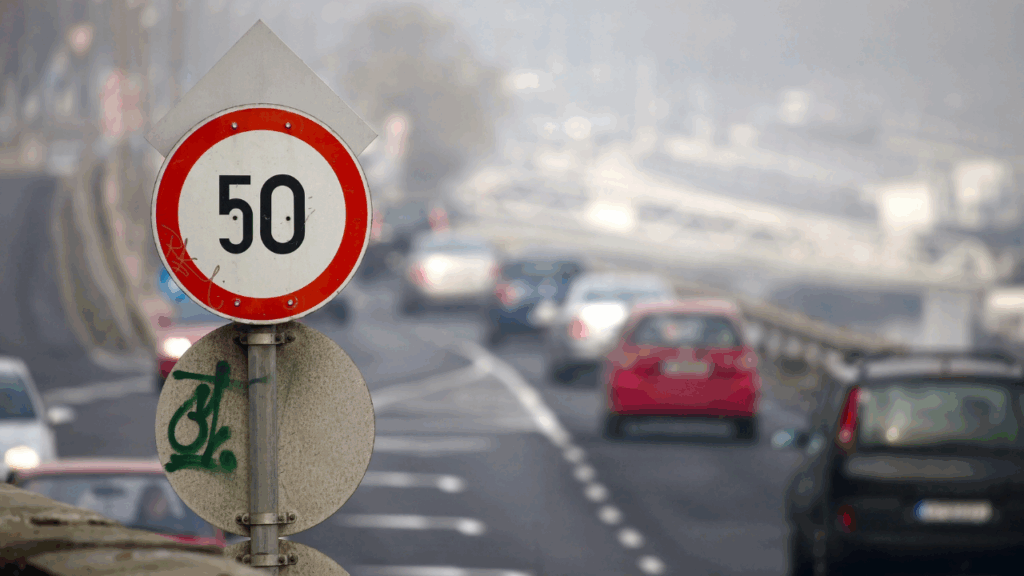
The UAE is famous for its wide, multi-lane highways, but speed limits are rigorously enforced through a sophisticated network of fixed and mobile radars.
The Specifics and The Fines: Speed limits are clearly signposted and can vary. Generally, within cities, the limit is 60-80 km/h, on major highways it is 100-120 km/h, and on certain expressways like Abu Dhabi’s Sheikh Zayed Bin Sultan Street (E10) or Dubai’s Sheikh Mohammed Bin Zayed Road (E311), it can be 140 km/h. However, a critical rule many overlook is the minimum speed limit on the left-most lanes of major highways, which is often 60 km/h. Driving too slowly can also be hazardous and may incur a fine.
The fines for speeding are tiered based on the severity of the offense. Exceeding the speed limit by more than 80 km/h is considered one of the most serious traffic violations and can result in a court case, a hefty fine of up to AED 3,000, 23 black points, and the confiscation of the vehicle for 60 days.
A particularly dangerous and illegal practice is sudden and unnecessary braking, especially on high-speed highways, which can cause catastrophic chain-reaction collisions. This offense carries a severe penalty of AED 1,000 and 4 black points.
How to Stay Safe: Always be aware of the changing speed limit signs. Use your cruise control on highways to maintain a consistent and legal speed. Maintain a safe following distance (at least a 2-4 second gap) from the vehicle in front of you to avoid the need for sudden braking. If you are a slower driver, stay in the right-hand lanes.
4. The Zero-Tolerance Policy on Drink Driving

The UAE has an absolute zero-tolerance policy towards driving under the influence of alcohol. There is no permissible blood alcohol level.
The Specifics and The Fines: This law applies to all drivers, including visitors and residents. If you are caught driving with any trace of alcohol in your system, you will face severe legal consequences. The penalties are determined by a traffic court and can include a minimum jail sentence, a fine of not less than AED 20,000, and the confiscation of your vehicle for 60 days. Your driving license will also be suspended, often for a period of one year.
How to Stay Safe: The rule is simple: if you plan to drink, do not drive. Plan your transportation in advance. Use a taxi, a ride-hailing app like Uber or Careem, or designate a completely sober driver. The risk is simply not worth the catastrophic consequences.
5. Lane Discipline and Indicator Usage

Proper lane discipline is the cornerstone of smooth and safe traffic flow. The fundamental rule is “keep right, pass left.”
The Specifics and The Fines: The left-most lanes on multi-lane roads are for overtaking only. Once you have overtaken a vehicle, you should safely move back to the right. Hogging the left lane is not only inconsiderate but also illegal and can lead to a fine of AED 400. Similarly, failing to use your indicators when changing lanes or turning is a fineable offense (AED 200) because it removes the predictability that other drivers rely on. Jumping a red light is one of the gravest offenses, with a penalty of AED 1,000, 12 black points, and a 30-day vehicle impoundment.
How to Stay Safe: Be mindful of your position on the road. Use your rearview and side mirrors frequently. Always, without exception, use your turn signals to communicate your intentions to other drivers well in advance of any maneuver.
A Detailed Overview of Common Fines and Black Points
The table below provides a clear summary of some of the most common traffic violations. Please note that fines can be updated, and local emirates may have slight variations.
| Traffic Violation | Fine (AED) | Black Points | Vehicle Confiscation | Notes |
|---|---|---|---|---|
| Jumping a Red Light | 1,000 | 12 | 30 days | A major offense with severe consequences. |
| Using Phone While Driving | 800 | 4 | – | Includes holding the device for any purpose. |
| Not Wearing Seat Belt | 400 | 4 | – | Driver is fined for every unbuckled passenger. |
| Driving Under Influence | ≥ 20,000 + Court Case | – | 60 days | Minimum jail term and license suspension apply. |
| Reckless Driving / Street Racing | 2,000 | 12 | 30 days | Can lead to vehicle being permanently confiscated. |
| Exceeding Speed Limit by >60 km/h | 2,000 | 12 | 30 days | Fines are tiered based on the speed exceeded. |
| Sudden Braking | 1,000 | 4 | – | Endangering other road users. |
| Not Leaving Safe Distance | 400 | 4 | – | A common cause of rear-end collisions. |
| Hogging the Left Lane | 400 | – | – | Obstructing the flow of traffic. |
| Parking in Spaces for People of Determination | 1,000 | – | – | A socially irresponsible act with a high fine. |
The Salik System and Parking Regulations
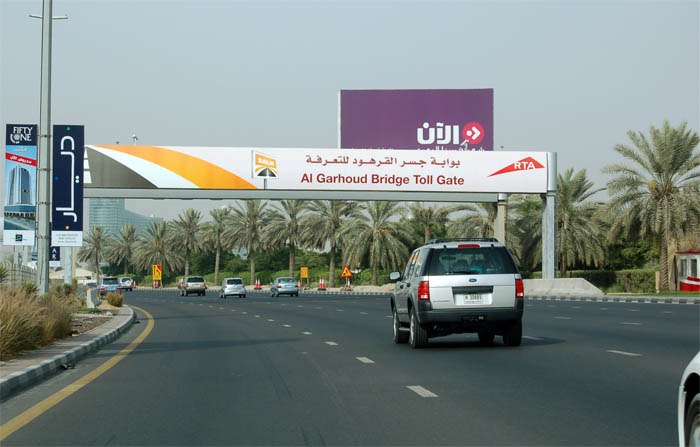
In Dubai and Abu Dhabi, certain roads require the use of a Salik (Dubai) or Darb (Abu Dhabi) toll gate tag. It is the driver’s responsibility to ensure the tag is installed and the account is active and funded. Driving through a toll gate without a valid tag or with insufficient balance will result in a fine (AED 50 per passing in Dubai, plus AED 50 administrative fee if not paid promptly).
Parking rules are strictly enforced. Always check for parking signs. Paid parking zones are common, and you must display a ticket or pay via SMS/app. Never park in prohibited areas like yellow box junctions, in front of entrances, or, as mentioned, in spaces reserved for People of Determination. Fines for illegal parking typically start at AED 200 and can lead to the vehicle being towed.
How to Check and Pay Your Traffic Fines
Staying on top of your traffic file is a key part of responsible driving in the UAE. You can easily check for fines through several official channels:
- Dubai Police: Website, App, or Smart Police Stations (SPS).
- Abu Dhabi Police: Website or App.
- Ministry of Interior (MOI): The MOI UAE app or the MOI website (www.moi.gov.ae) can be used for all emirates.
Payment can be made directly through these platforms using a credit or debit card. It is advisable to settle fines promptly to avoid additional penalties or complications during vehicle registration renewal.
Driving Towards a Safer Future
The UAE’s traffic rules are comprehensive, strictly enforced, and ultimately designed with one primary goal: to save lives. By understanding and respecting these regulations, you are not just avoiding fines and black points; you are actively participating in creating a safer road environment for everyone. The roads are a shared space, and safety is a shared responsibility.
Embrace defensive driving techniques, stay patient, and always plan your journey. The convenience and beauty of driving in the UAE are privileges that come with this responsibility. So, buckle up, stay focused, and enjoy the journey. For those looking to settle down and find their perfect home in this dynamic country, exploring the options with a trusted partner like True Vision Properties can help you find a community that suits your lifestyle, ensuring your life off the road is as smooth as your drive.
Frequently Asked Questions (FAQ) on UAE Traffic Rules
Q1: How many black points can I get before my license is suspended?
If a driver accumulates 24 black points within a 12-month period, their driving license will be suspended. The suspension period is typically for 3 months for light vehicle licenses, after which the black points are cleared.
Q2: I am a tourist; can I drive with my home country’s license?
Yes, many nationalities can drive in the UAE with a valid international driving permit or their home country’s license, depending on reciprocal agreements. However, it is crucial to check with the relevant traffic department (RTA in Dubai or Abu Dhabi Police) based on your nationality before you drive. Tourists are subject to the same traffic laws and fines.
Q3: What should I do immediately after a minor traffic accident?
The “Move It” law requires drivers involved in minor accidents with no injuries to move their vehicles to the nearest safe location to avoid obstructing traffic. You must then report the accident to the police immediately via the Dubai Police app (for accidents in Dubai) or by calling the police non-emergency number. Do not leave the scene without reporting.
Q4: Are there any new rules I should be aware of?
The UAE frequently updates its traffic laws. Recent emphasis has been on increasing fines for distracted driving, enforcing seat belt use for all passengers, and penalizing the installation of illegal tinting or modifications that increase a vehicle’s noise level. Always stay updated via official police social media channels and websites.
Q5: Is it mandatory to have car insurance?
Yes, third-party liability insurance is the minimum legal requirement for every vehicle registered in the UAE. Driving without valid insurance is a serious offense that can result in a fine and vehicle impoundment.